What Determines Neon Sign Prices?
A neon sign price can't be reduced to one number. Here is every factor that moves it, from size to installation, and how to get a quote.
By Emre Neon7 min read
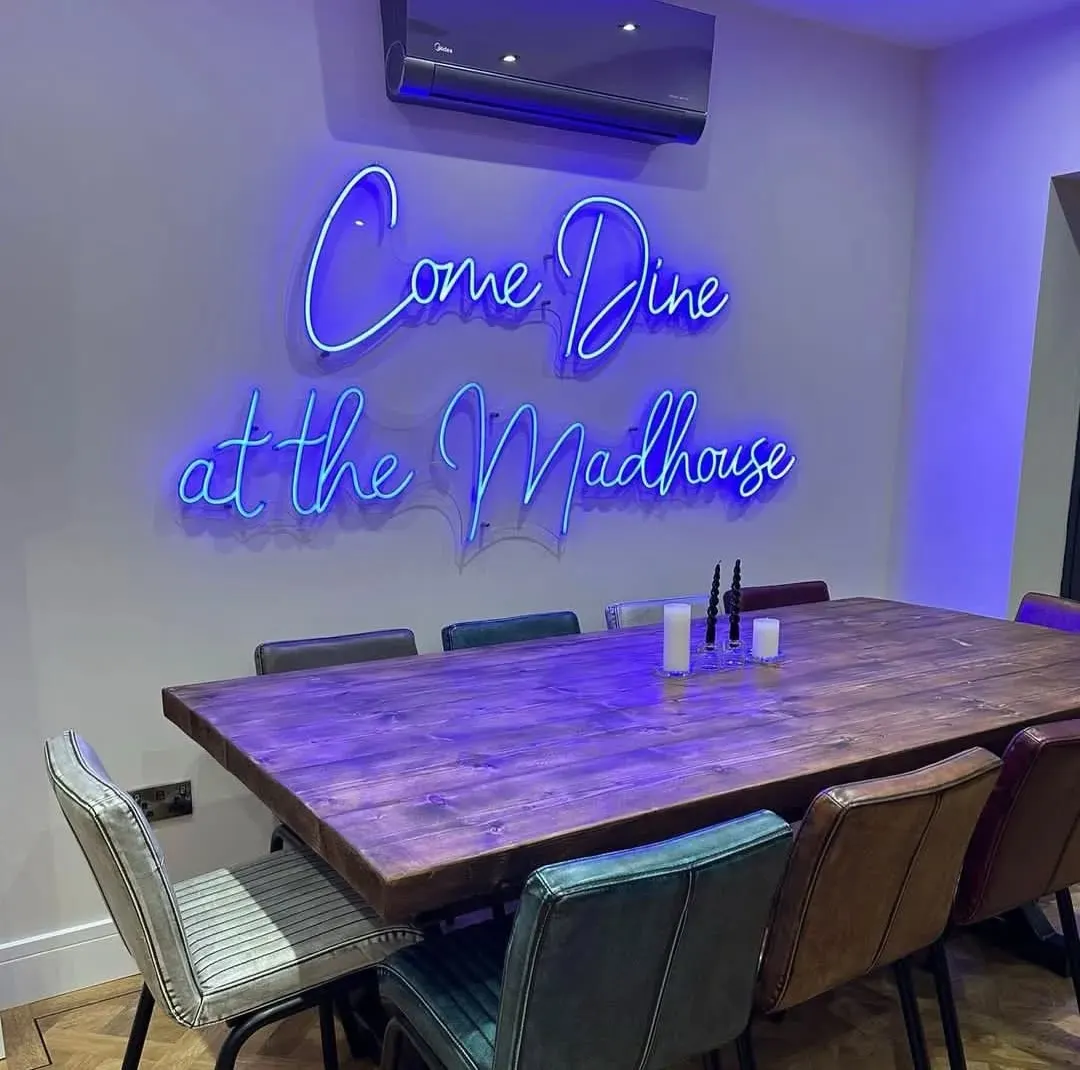
You can't give a neon sign price in one sentence like "this size costs this much." Two signs of the same width can end up with very different costs depending on their design, technology and where they are installed. This post walks through each factor so you can read a quote and understand why it comes out the way it does.
We deliberately don't list any prices. Market figures change quickly and they never reflect your specific design. Instead, we explain which decision pushes the cost in which direction.
The main cost factors at a glance
| Factor | General effect on price |
|---|---|
| Size | More material and labor as it grows |
| Design complexity | Rises with curves, detail and layers |
| Tube / LED strip length | Rises with total line length |
| Number of letters | Each letter is separate work and a separate connection |
| Technology | LED neon, glass neon, channel letters and lightboxes have different cost structures |
| Material and backboard | Backing type and cut shape matter |
| Outdoor requirements | Extra protection is needed for durability |
| Control | Dimmer, remote and RGB can be extra items |
| Installation | Height, wall type and location matter |
Size and design factors
Size
Size is the most visible factor. A bigger sign needs more material, a longer line and more labor. The relationship isn't always linear, though. Doubling the dimensions usually doesn't double the cost: some items, such as design preparation, don't depend on size, while others, like transport and installation, grow quickly with it.
Start from the viewing distance. A small desktop neon and a sign hanging in a shop window aren't sized by the same logic. An oversized sign strains the budget and the balance of the wall.
Design complexity
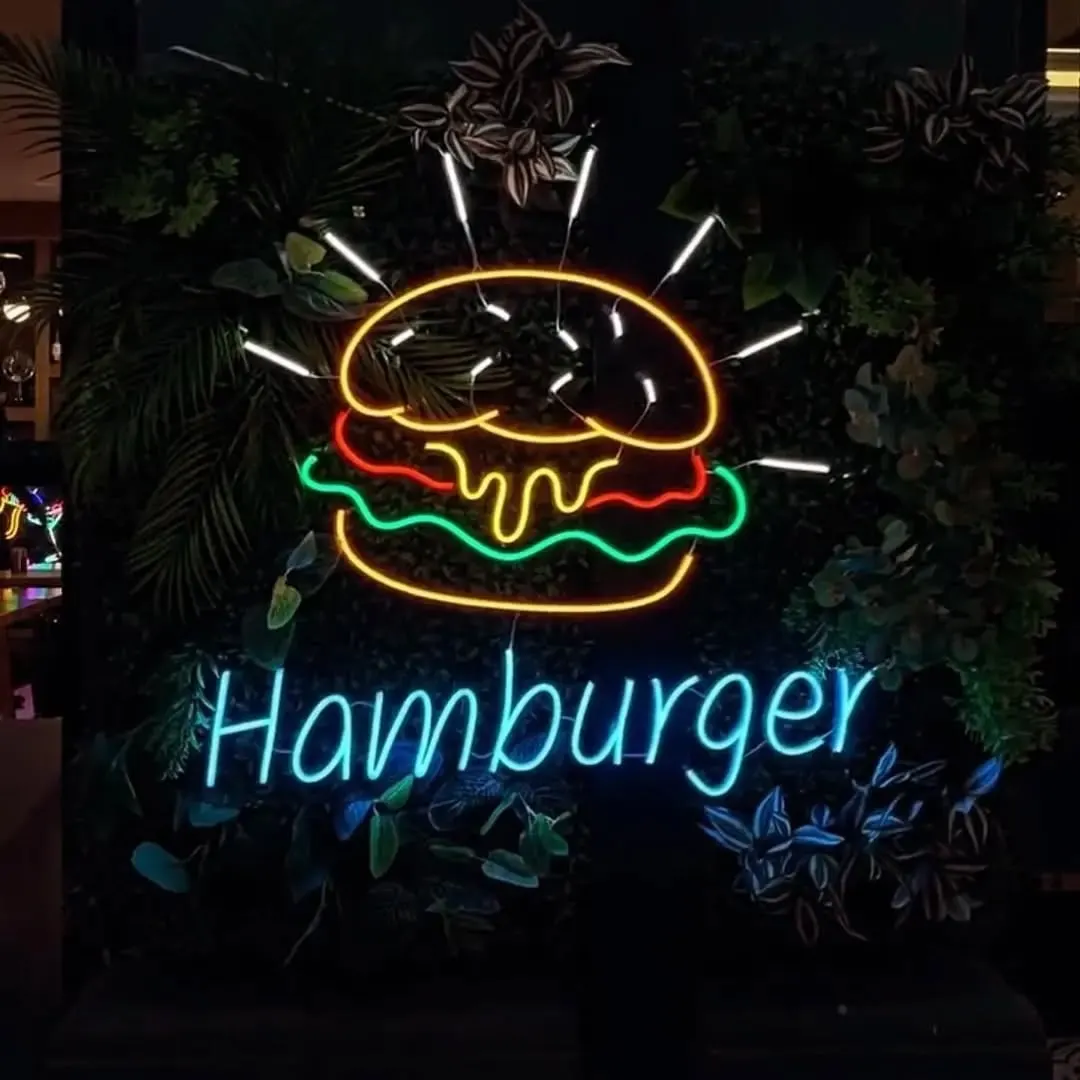
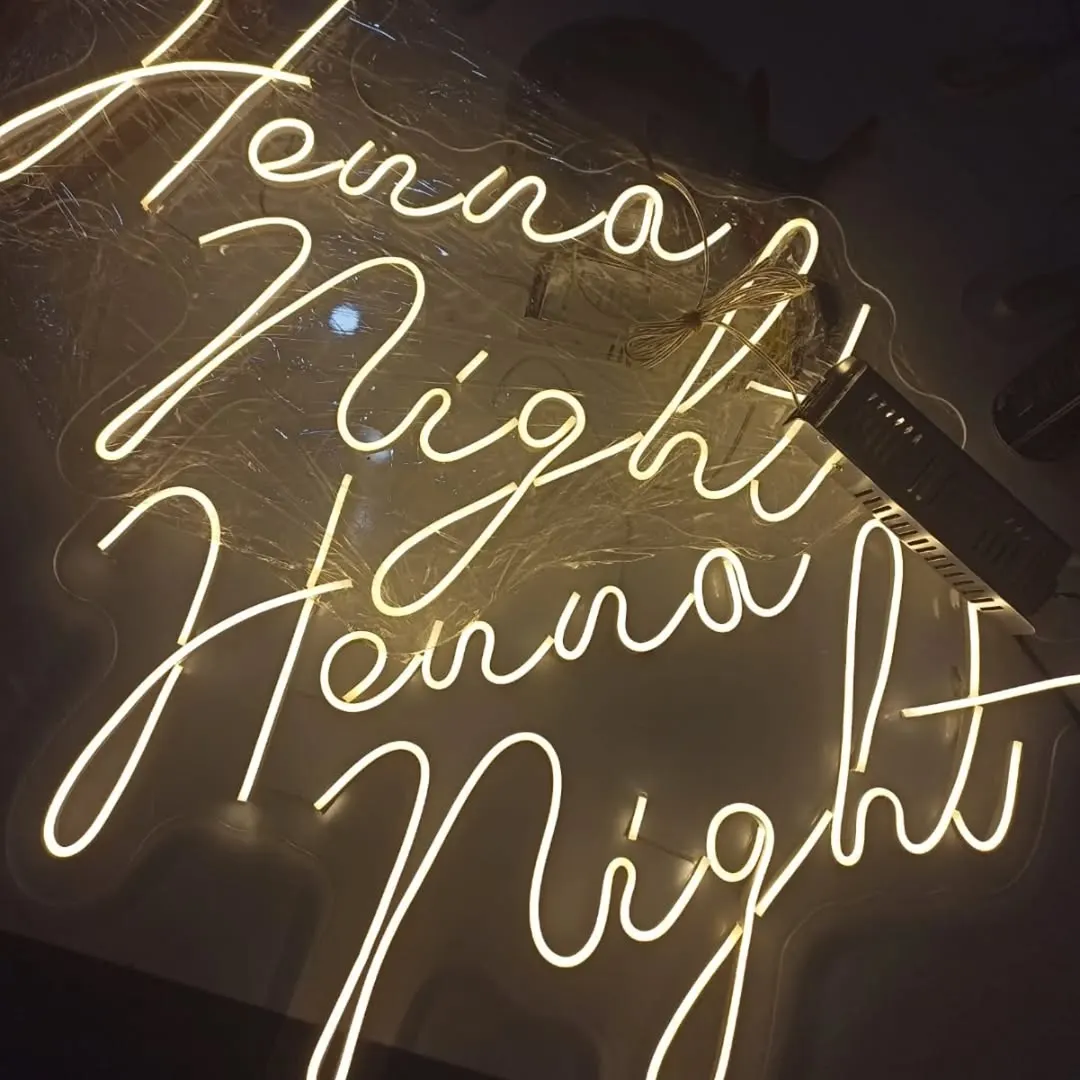
A plain single-line script and an illustration made of overlapping lines don't take the same effort, even at the same length. Sharp corners, thin curves, crossing lines and many separate parts make production harder.
Design features that typically raise the price:
- Many sharp turns and tight curves
- Fine details placed close together
- Multi-color sections
- Compositions with several separate parts that must be aligned
Simplifying often lowers the price and improves readability from a distance. A fine detail disappears from far away anyway.
Tube or LED strip length
The total length of the glowing line goes straight into the cost. It isn't the same as the sign's outer dimensions. A curly script squeezed into a small area can need a longer line than a wide but simple shape.
When asking for a quote, "how long is the total line?" is a more useful question than "how many centimeters is the text?" Manufacturers usually evaluate price by that measure.
Number of letters
Each letter is its own shape, connection and piece of labor. "Coffee" and "Emre's Coffee Corner" can be the same width, yet the second contains far more letters and line. If your name is long, you could:
- Shorten it or use only the brand name
- Put the longer description on another surface in the window
- Reduce the number of lines
Technology, materials and environment
Technology: LED neon, glass neon, channel letters, lightbox
The technology you pick changes how the price is built. Emre Neon offers LED neon (flex), mirror/acrylic neon, glass neon, channel letters and lightboxes. As a general frame:
- LED neon: Its flexible build suits many shapes, and it is a practical starting point in most projects.
- Glass neon: Chosen for the classic look. It is labor-intensive and, because glass is fragile, needs extra care in transport and installation.
- Channel letters: Letters made as three-dimensional bodies, common on storefronts.
- Lightbox: A back-lit surface, often preferred for graphic and logo-heavy work.
For a closer comparison, read LED neon vs glass neon. What matters here: choose the technology for where it will be used, then plan the budget around that choice, not the other way round.
Material and backboard
The base behind the glowing part is a cost item too. Clear acrylic, a colored base, a contour-cut panel or a plain rectangular panel each need different material and labor.
- Plain rectangle: Simpler and usually cheaper.
- Contour cut: Follows the outline of the design. It looks cleaner but takes more cutting work.
- Clear backboard: Shows off the light on the wall and gives the sign a floating feel.
The choice is partly about looks and partly about how the sign will be fixed to the wall.
Outdoor requirements
A sign made for indoors isn't built like one that will face rain, sun and wind on a facade. Outdoor use generally calls for extra protection and a sturdier build, which shows in the price.
Ask your manufacturer for exact technical values, such as any protection rating, in writing, and ask what is planned for your project. For general differences, see indoor vs outdoor neon signs.
Controls, installation and custom work
Control: dimmer, remote, RGB
How the sign switches on and off, and how its brightness is adjusted, is also a choice:
- Simple on/off: The most basic option.
- Dimmer: Lets you adjust brightness to the setting. Useful for venues that run under changing light through the day.
- Remote control: Handy when the sign is high or hard to reach.
- RGB: Lets you change color, but needs a different structure and controller than a fixed single-color sign.
For anything involving the adapter or electrics, always consult a professional. Don't open or modify these parts yourself.
Installation
Where and how the sign is mounted affects the cost. Things to check:
- Wall type (concrete, drywall, glass, wood)
- Height and difficulty of access
- Distance from the power outlet to the sign
- Whether it goes in a window, on a facade or hangs from a ceiling
- Who handles the installation, the manufacturer or you
Don't leave installation to the end. When the outlet location and the wall's load capacity are settled early, surprise costs shrink.
Custom logo work
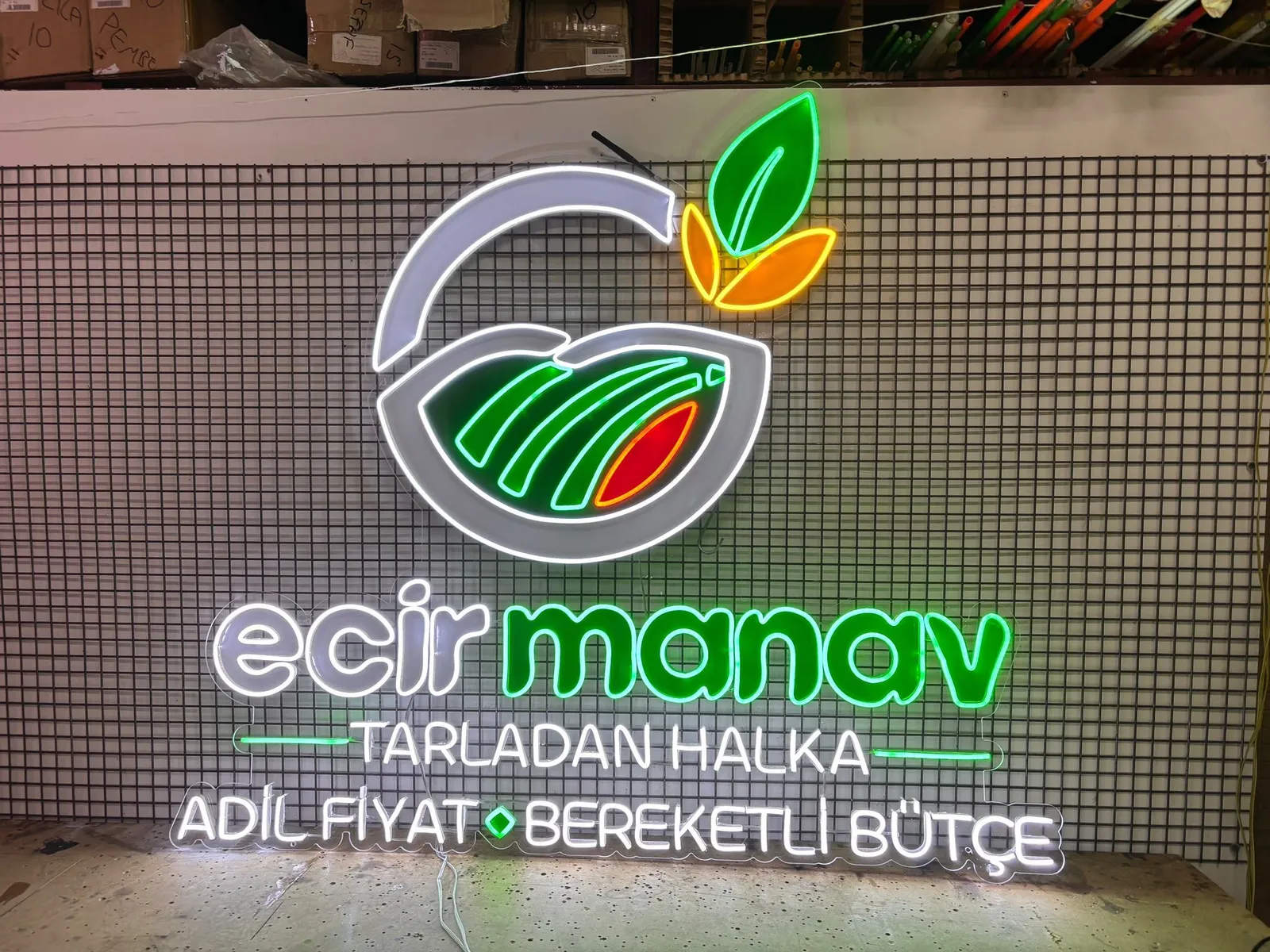
Writing a name in a ready-made font is not the same job as converting an existing logo into neon lines. A logo may need simplifying as it becomes neon paths. Filled areas, gradients and very thin lines can't be transferred directly; they are interpreted through lines or the backing. That preparation is part of the price.
To upload a logo, use the logo upload mode. A high-resolution file, ideally a vector (SVG, AI, PDF), speeds things up.
How to get a price
Prices are not shown on the site. Use the configurator to design and preview your sign, then send the design to us. Emre Neon shares the price after reviewing it.
The process works like this:
- You build your design in the configurator.
- You send the design to us for a quote, or contact us on WhatsApp, Instagram or by phone.
- We review the design and share the price.
- The design is confirmed.
- Production, delivery and installation follow.
The price is final only after design approval. It can change if a detail is added later, the size changes or installation conditions differ.
What to include when you ask for a quote
For a clearer quote, share:
- Where it will be used (indoor, outdoor, window)
- Approximate size or wall width
- Text, logo or image
- Color preference
- Control needs (dimmer, remote, etc.)
- The mounting surface and address
Managing the budget wisely
If you need to bring the price down, start with the items that affect the look least: simplify unnecessary detail, size the sign for the distance you actually need, shorten the text. Narrowing the scope usually works better than lowering quality.
Conclusion
Neon sign prices add up from size, design, technology, material, control and installation. Once you know these items, comparing quotes and deciding by your own priorities gets easier. To build your design and send it for a quote, try the configurator. Contact us for pricing.
Frequently asked questions
Every sign is made to order. Two signs of the same width can differ in design, technology and installation conditions. A quote based on your own design is more honest than a fixed list.
No. Prices are not listed on the site. Design your sign, send it to us, or contact us on WhatsApp, Instagram or by phone, and we share the price after reviewing your design and the installation conditions.
Reducing the size, simplifying the design, using fewer letters or choosing a simpler control option usually lowers the cost. Ask your manufacturer which changes save money without hurting the look.
Logos often have more curves, layers and colors, which can add design and production work. A simple logo can still cost less than a long line of text. It depends on the logo's structure.