Indoor vs Outdoor Neon Signs: What Actually Changes
A design that works on an indoor wall may not suit a facade. Here is what a manufacturer weighs on outdoor neon sign projects, and what to tell them before you order.
By Emre Neon5 min read
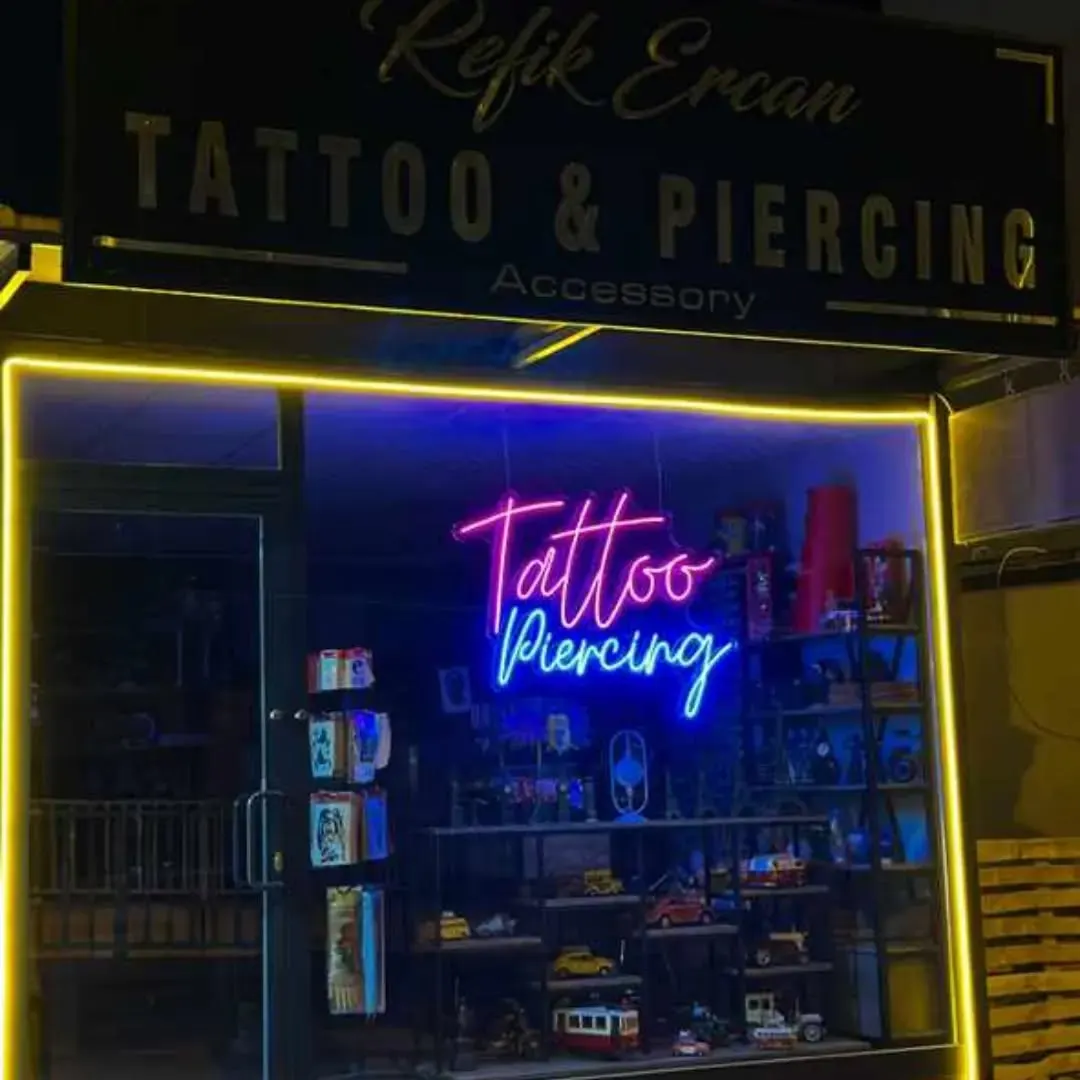
When people choose a neon sign they usually start with the design: colour, lettering, size. But where the sign will hang shapes many of those decisions. The same lettering that sits happily on an indoor wall meets very different conditions on a facade.
This article covers what a maker evaluates on outdoor neon sign projects and where they differ from indoor work. The goal is to help you ask the right questions before you order.
Indoor and outdoor: the core difference
An indoor sign normally lives in a controlled setting: steady temperature, dry air, a wall nobody touches. An outdoor sign deals with rain, wind, dust, temperature swings and direct sun.
So the two categories are not separated by location alone. Material choice, placement of electrical parts, mounting method and even how much fine detail a design can carry all shift. On outdoor projects a manufacturer will typically look at:
- How exposed the sign will be to the weather
- The mounting surface and the load it must carry
- Daytime and night-time visibility expectations
- Materials and where the electrical components sit
- Access for care and servicing
Environmental conditions
Moisture and rain
Moisture deserves attention with any electrical product. Even indoors, a bathroom, kitchen or poolside wall calls for a separate conversation. Outside you add rain, condensation and damp.
That is why "will this sign survive outside?" has no one-line answer. Whether the sign is fully exposed, under an overhang or behind glass changes the outcome. Give your maker that detail plainly.
Sun and temperature
Direct sun affects a sign in two ways. One is heat: surfaces and materials respond differently to temperature changes. The other is perception: in strong daylight, neon colours look less vivid than they do indoors.
A south-facing shop window can raise these concerns even if you count it as indoor. Sharing the window's direction and how much sun it gets is useful.
Wind, dust and contact
Outdoors, a sign faces wind load and vibration, and dust and grime build up faster. Indoors the main risk is usually people: kids, narrow corridors, a busy cafe. The risks differ, and so do the solutions.
Mounting differences
Indoor mounting is mostly wall fixing, hanging or a desktop stand. Outdoors, the surface type (concrete, aluminium cladding, brick, glass) and the sign's weight become decisive.
A maker may ask before installation:
- What surface will the sign be fixed to?
- How easy is access, and how far is the power source?
- Is there a structure that can carry the sign's weight?
- Is there a suitable route for the cable?
Work at height or on a facade also brings its own safety requirements. Rather than improvising, plan the installation together with the manufacturer. In Emre Neon's process, production follows design approval, and delivery and installation come after that.
Visibility: day, night and distance
Neon shines at night, but an outdoor sign may also need to be read in daylight. Ask two questions:
- Who will see it, and from how far? A pedestrian on the pavement and a driver across the street need different sizes.
- When does it matter most? If you trade in the evening, night visibility leads. If daytime foot traffic is heavy, a different approach may be needed.
As a general rule, thin lines and small details disappear as distance grows. For longer viewing distances, thicker strokes, simpler shapes and high-contrast colours make sense. In strong daylight, other product types such as channel letters or a lightbox may also be worth discussing with your maker.
Material requirements
A material chosen for indoor use may not behave the same way outside. For outdoor work a maker looks at:
- Whether the light-emitting part and the backing suit outdoor conditions
- The type of backboard and how the sign attaches to the wall
- How colours and surfaces may behave under sun over time
- Protection of joints and edges
We do not claim that a given material lasts a given time outdoors; that depends on the project, location and use. When comparing options, you can browse the outdoor product category and ask at the quote stage which one suits your location.
Electrical components
A neon sign runs on an adapter (power supply) and a connecting cable. Indoors these usually sit behind the wall or near a socket. Outdoors, where the adapter sits, how it is ventilated and how it stays dry matter a great deal.
Two points to keep clear:
- Leave adapter, cable and mains work to a professional. Electrical work outdoors needs more care, not less.
- Do not open or try to repair the parts of a sign that is powered. If something looks wrong, unplug it and consult the maker or a licensed electrician.
Where the power supply will sit, where the cable will run and how it connects to a socket or panel should be planned before installation. Doing that with your maker reduces changes later.
Checklist before you order
When requesting a quote for an outdoor project, prepare this information:
| Information | Why it matters |
|---|---|
| Sign location (exposed, under cover, inside window) | Defines conditions |
| Mounting surface and a photo of it | Defines fixing method |
| Distance to power source | For cable and adapter planning |
| Viewing distance and direction | For size and line thickness |
| Whether it gets direct sun | For colour and material assessment |
| Design or logo file | For sizing and quoting |
Photos and measurements are the quickest route to a sound assessment. To see which solutions suit which settings, take a look at our applications page.
Summary
The gap between indoor and outdoor goes beyond location. Conditions, mounting, visibility, materials and electrical planning all have to be weighed together. The clearer you are about where the sign will go, the better the advice you get.
You can build your design in the neon configurator, then send us the design along with the location and mounting details on WhatsApp to request a quote.
Frequently asked questions
We do not recommend it. Indoor pieces are built without rain, humidity or direct sun in mind. Say at the order stage that the sign will be outdoors, so the maker can assess materials and construction accordingly.
Behind glass is usually treated as close to indoor, but a window that takes direct sun can still be demanding in terms of heat and light. Tell the maker which way the window faces and how much sun it gets.
This article does not promise any waterproofing. For outdoor projects, location, shelter and materials are assessed case by case. Ask for the specifics when you request a quote.
No. Adapter, cable and mains connections should be done by a qualified professional, especially outdoors.